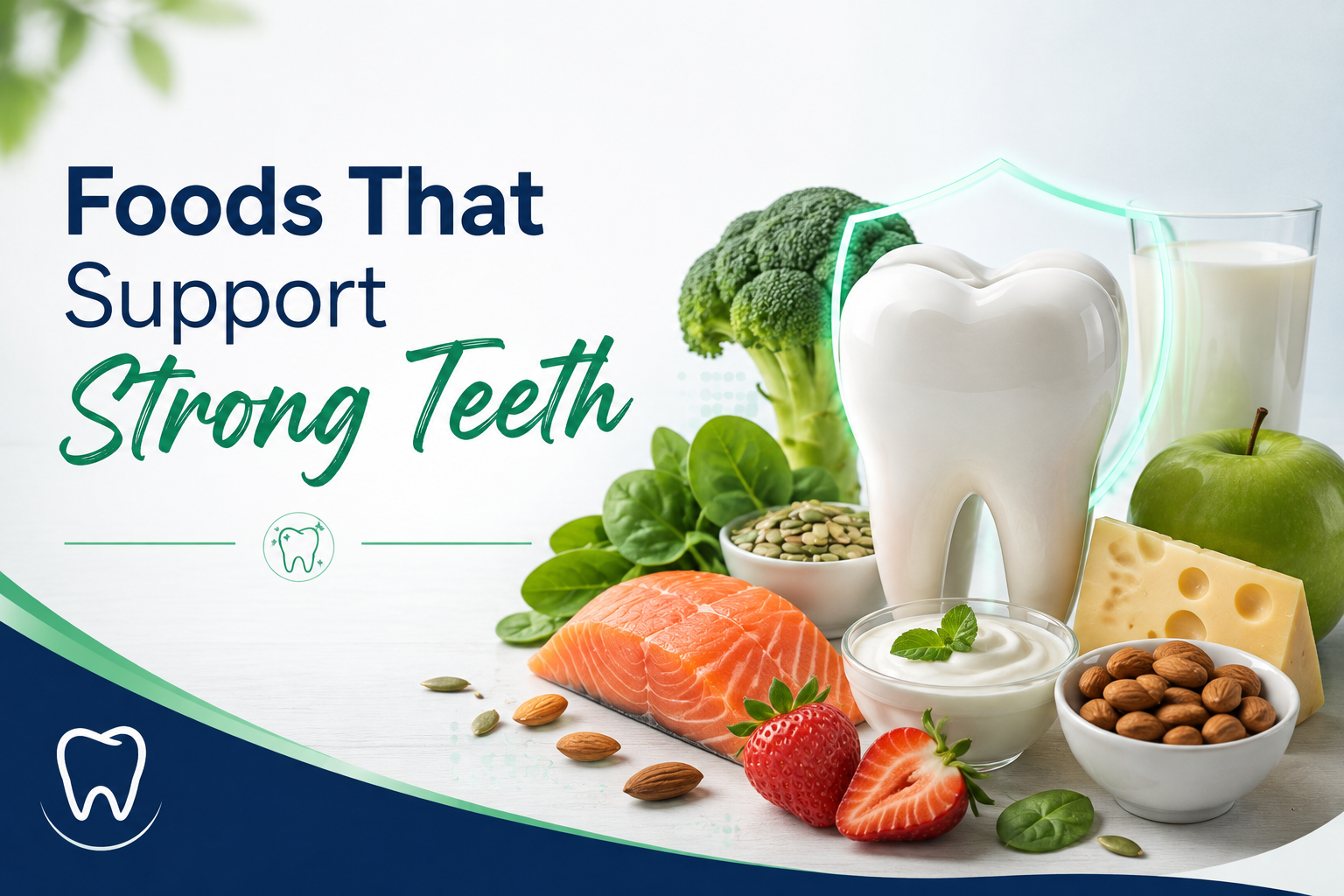
When you think about keeping your teeth strong, brushing and flossing probably come to mind first.
Food may not be the first thing you think about.
But what you eat every day can affect your teeth and gums. Your teeth need nutrients such as calcium, phosphorus, vitamin D, and vitamin C to stay healthy. Some foods also help stimulate saliva, which naturally helps wash away food particles and acids in your mouth.
This doesn’t mean you need a special dental diet.
Your regular meals can provide many of the nutrients your teeth need.
The trick is knowing which foods to include more often and which habits may put your teeth at risk.
Why Nutrition Matters for Strong Teeth
Your teeth are living structures surrounded by gum tissue and supported by the jawbone.
They need a steady supply of nutrients to maintain their structure.
A balanced diet can support:
- Strong tooth enamel
- Healthy gums
- Normal bone health
- Saliva production
- Overall oral health
Poor eating habits, especially frequent sugary snacks and drinks, can increase the amount of acid-producing bacteria in your mouth.
That’s one reason your daily food choices matter.
1. Milk and Other Dairy Foods
Milk is well known for its calcium content.
Calcium helps support teeth and bones. Dairy foods can also provide phosphorus and protein.
Good choices include:
- Milk
- Plain curd
- Paneer
- Cheese
Cheese can be particularly useful as a snack because it contains calcium and phosphorus and doesn’t contain the high sugar levels found in many sweet snacks.
If you enjoy dairy, adding it to regular meals can be an easy way to support your nutrient intake.
2. Leafy Green Vegetables
Spinach, methi, drumstick leaves, and other leafy greens can add several nutrients to your diet.
They also provide fibre.
Crunchy vegetables require more chewing, which can stimulate saliva production. Saliva plays an important role in protecting your mouth by helping clear food particles and neutralise acids.
Try adding leafy vegetables to:
- Dal
- Sabzi
- Paratha
- Soups
- Cheela
You don’t need to eat a huge bowl every day.
Regular inclusion is what matters.
3. Crunchy Vegetables
Carrots, cucumber, radish, and other crunchy vegetables can make useful snack choices.
They contain water and fibre and require chewing.
Instead of reaching for biscuits or sweets between meals, try sliced cucumber or carrot with a balanced snack.
Of course, vegetables don’t replace brushing or professional dental care.
They simply make a better everyday food choice.
4. Eggs
Eggs are an easy source of protein and provide several nutrients, including phosphorus and vitamin D.
Protein contributes to the maintenance of tissues throughout the body, while phosphorus works with calcium in maintaining bones and teeth.
You can include eggs as:
- Boiled eggs
- Vegetable omelettes
- Egg bhurji
- Egg sandwiches
If you eat eggs, they can easily fit into a balanced breakfast or lunch.
5. Fatty Fish
Fish such as salmon, sardines, and mackerel provide protein and nutrients such as vitamin D.
Vitamin D helps the body absorb calcium, which is important for maintaining healthy bones and teeth.
For people who eat seafood, including fish in meals can be one way to add variety to their protein sources.
Vegetarian diets can also provide many important nutrients, but vitamin D intake may need individual attention depending on diet and sun exposure.
6. Nuts and Seeds
Almonds, walnuts, sesame seeds, and other nuts and seeds can provide protein, minerals, healthy fats, and other nutrients.
They can also make a more filling snack than many sugary packaged foods.
Try adding:
- Almonds for breakfast
- Sesame seeds to vegetables
- Chia seeds to curd
- Ground flaxseeds to oats
Choose unsalted varieties more often and pay attention to portion sizes.
Healthy foods can still contribute significant calories when eaten in large amounts.
7. Apples and Other Whole Fruits
Whole fruits contain water, fibre, vitamins, and natural sugars.
Apples, guava, pears, and other firm fruits require chewing and can stimulate saliva.
But there’s an important difference between eating whole fruit and drinking fruit juice.
When you eat whole fruit, you also get the fibre.
Fruit juice can expose your teeth to sugars without providing the same amount of fibre and chewing.
For everyday snacking, whole fruit is usually the simpler choice.
8. Guava and Vitamin C-Rich Foods
Vitamin C supports healthy gums and connective tissues.
Guava, oranges, amla, kiwi, strawberries, tomatoes, and bell peppers can provide vitamin C.
Adding these foods to your meals gives you variety while helping meet your nutritional needs.
A simple combination such as guava with a handful of nuts can make a convenient snack.
9. Sesame Seeds and Til-Based Foods
Sesame seeds are commonly used in Indian cooking and can contribute calcium, healthy fats, and other nutrients.
You can use them in:
- Til chutney
- Sesame vegetable toppings
- Homemade laddoos with limited added sugar
- Salads
The food’s overall preparation matters too.
A sesame-based sweet with a large amount of added sugar isn’t the same as using sesame seeds as part of a balanced meal.
10. Water
Water doesn’t provide calcium or vitamin D, but it deserves a place on this list.
It helps keep your mouth moist and supports saliva production.
Water is also a better everyday drink for your teeth than sugary soft drinks, energy drinks, or sweetened beverages.
After eating, drinking water can also help clear some food particles from your mouth.
Make plain water your usual drink and keep sugary beverages as occasional choices.
Foods and Drinks That Can Increase Dental Risk
Knowing what to eat is only half the story.
How often you consume sugary or acidic foods also matters.
Try to limit frequent exposure to:
- Sweets
- Toffees
- Sugary biscuits
- Soft drinks
- Energy drinks
- Sweetened tea and coffee
- Sticky desserts
- Frequent fruit juice
You don’t necessarily need to remove every sweet food from your life.
The bigger issue is having sugary foods and drinks repeatedly throughout the day.
For example, sipping a sweetened drink for several hours exposes your teeth to sugar much more frequently than having it with a meal.
Don’t Forget About Calcium and Vitamin D
Calcium gets most of the attention when people talk about strong teeth.
It is important, but it doesn’t work alone.
Your diet also needs other nutrients, including vitamin D and phosphorus.
Sources can include:
- Dairy foods
- Eggs
- Fish
- Fortified foods
- Nuts and seeds
- Legumes
- Leafy vegetables
If you’re concerned about whether your diet provides enough of these nutrients, a qualified healthcare professional or dental professional can help you understand what you may need.
Your Eating Pattern Matters More Than One Food
There isn’t one food that can make your teeth strong on its own.
Eating cheese once won’t undo a diet high in sugary drinks.
Likewise, eating an apple doesn’t replace brushing.
Think about your overall routine.
Do you eat balanced meals?
Do you drink water regularly?
Do you snack on sugary foods throughout the day?
Do you brush twice daily with fluoride toothpaste?
These questions give you a much clearer picture of your oral health habits.
When to Speak With a Dental Professional
Food can support oral health, but it cannot treat dental disease.
If you notice:
- Tooth sensitivity
- Bleeding gums
- Persistent bad breath
- Tooth pain
- Visible cavities
- Swelling
- Cracked or damaged teeth
It’s better to get the problem checked rather than trying to fix it through diet alone.
A qualified Dentist in Al Rigga can assess your teeth and gums, identify problems early, and recommend appropriate dental care based on your individual needs.
Regular dental check-ups also help detect problems before they become more difficult or expensive to treat.
Build Tooth-Friendly Eating Habits
You don’t need to completely change your kitchen.
Start with simple choices.
Choose water more often.
Include calcium-rich foods.
Eat plenty of vegetables.
Choose whole fruits instead of juice more often.
Add nuts, seeds, eggs, or other nutrient-rich foods to your meals.
And try to reduce how often you snack on sugary foods.
Strong teeth are supported by more than what you put on your plate. Brushing with fluoride toothpaste, cleaning between your teeth, regular dental visits, and sensible eating habits all work together.
Your daily meals may seem ordinary, but those small choices can support your teeth and gums for years.
Simple Ways to Protect Your Teeth Every Day
Good food choices are only one part of keeping your teeth healthy.
Try to make these habits part of your routine:
- Brush twice a day with fluoride toothpaste.
- Clean between your teeth regularly.
- Drink water instead of sugary drinks.
- Avoid frequent snacking on sweets.
- Include calcium-rich foods in your meals.
- Choose whole fruits instead of fruit juice more often.
- Visit your dentist for regular check-ups.
You don’t need to change everything at once.
Start with one habit and build from there.
Choose Dental Advice You Can Trust
Nutrition can support healthy teeth, but it cannot replace proper dental care.
If you have recurring tooth pain, sensitivity, bleeding gums, or other oral health concerns, speak with a qualified dental professional instead of relying only on food-based solutions.
Professional dental advice can help identify the cause of a problem and guide you toward appropriate treatment.
Make Tooth-Friendly Foods Part of Your Routine
Strong teeth aren’t built from one particular food.
They are supported by your overall diet and daily habits.
Choose nutrient-rich foods.
Drink plenty of water.
Limit frequent sugary snacks and drinks.
Keep up with brushing and interdental cleaning.
And don’t skip regular dental check-ups.
Small choices made consistently can help support healthy teeth and gums for years.